
SOCIAL AND BEHAVIOR CHANGE COMMUNICATION (SBCC)
Inspiring Positive Behaviors and Social Transformation.
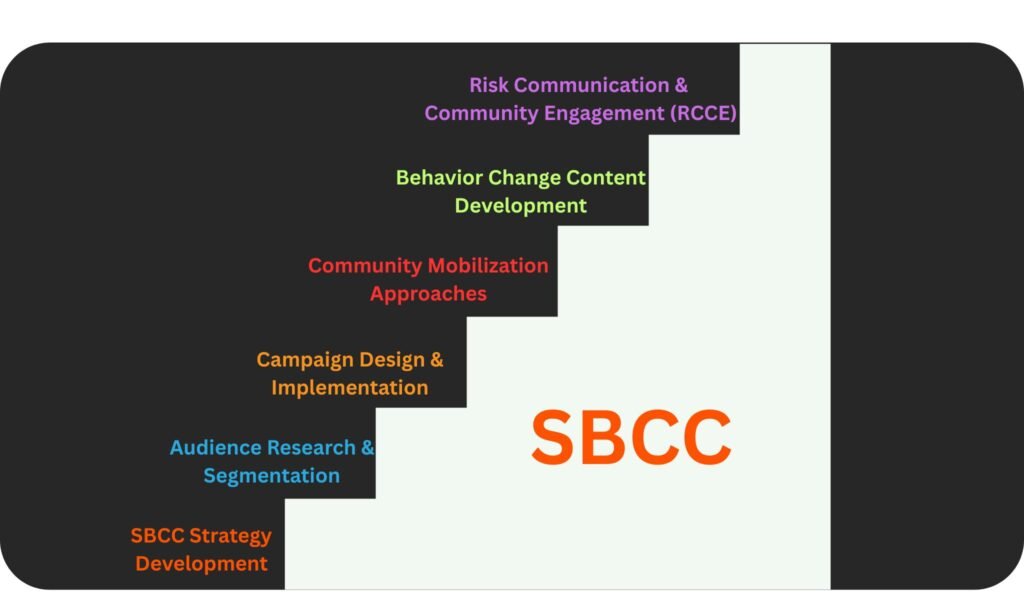
Changing behavior is one of the most challenging and most consequential things that development communication can attempt. It requires far more than raising awareness- it demands a deep understanding of why people do what they do, what barriers stand between current and desired behaviors, and what communication approaches are most likely to shift those barriers in specific community contexts. Bimba Nepal’s SBCC services draw on extensive experience working on behavior change programs in health, WASH, nutrition, gender-based violence prevention, and civic engagement across Nepal’s diverse geographic and social landscape. We design SBCC programs that are evidence-based, culturally grounded, and rigorously implemented.
SBCC Strategy Development
We develop comprehensive SBCC strategies grounded in formative research, behavioral analysis, and theory-of-change thinking. Each strategy defines target audiences, priority behaviors, communication approaches, channel mix, implementation timeline, and monitoring framework, providing a practical, actionable roadmap for behavior change programming.
Audience Research and Segmentation
Effective SBCC begins with understanding audiences in depth, their knowledge, attitudes, practices, social norms, information sources, and the specific barriers and enablers that shape their behavior. We conduct formative research including surveys, FGDs, and KIIs to develop audience profiles and segmentation frameworks that ground all subsequent communication design.
Behavior Change Content Development
We develop the full range of SBCC content that includes IEC materials (posters, games, flipcharts, brochures), digital content, radio spots, community theater scripts, interpersonal communication guides, and training materials, designed to be appropriate for the specific audiences, literacy levels, languages, and cultural contexts of each program.
SBCC Campaign Design and Implementation
We design and implement multi-channel behavior change campaigns- from concept and creative development through content production, channel selection, community rollout, and monitoring. Campaigns are designed with clear behavioral objectives, phased implementation plans, and built-in feedback loops to enable real-time adaptation.
Risk Communication and Community Engagement (RCCE)
During public health emergencies, disasters, and humanitarian crises, the quality of risk communication determines whether communities can protect themselves and their families. We develop RCCE strategies, train community engagement teams, produce emergency communication materials, and support real-time communication operations during active crises.